← Home · Investigation

Exploratory Test Pit Investigation in Sunderland

Together, we solve the challenges of tomorrow.

LEARN MORE →

Sunderland's heavy engineering past left more than shipyard cranes along the Wear. The buried foundations, old ballast layers, and backfilled docks have shaped the ground beneath the city in ways that boreholes alone cannot always capture. In our experience, a machine-dug test pit gives you the direct visual evidence that no core sample can. You see the actual strata. You spot the old timber piles. You identify the mixed fill from the 19th-century glassworks and colliery waste that still underlies parts of Hendon and Deptford. A well-located test pit reveals structural obstructions and lets you sample exactly the horizon that matters. When you need to confirm bearing strata or trace a buried service before excavation begins, there is no substitute for opening the ground and looking.

A logged test pit wall tells you more about Sunderland's post-glacial deposits in ten minutes than a desk study can in a week.

Process and scope

BS 5930:2015+A1:2020 sets the standard for ground investigation in the UK, and on Wearside its requirements are especially relevant. The glacial till across Sunderland can shift from stiff sandy clay to soft laminated silt within a single metre. Our test pits follow the Code of Practice for trial pitting, with logged faces, photographic records, and bulk or disturbed sampling at every change of material. Depths typically reach 3.0 to 4.5 metres using a tracked excavator, which handles the dense boulder clay common on the Magnesian Limestone plateau. Combining the pit log with a grain size analysis clarifies whether that sandy layer is a drainage path or a potential piping risk, and we often pair the investigation with an in-situ permeability test to measure infiltration rates directly in the pit floor before soakaway design.
Exploratory Test Pit Investigation in Sunderland
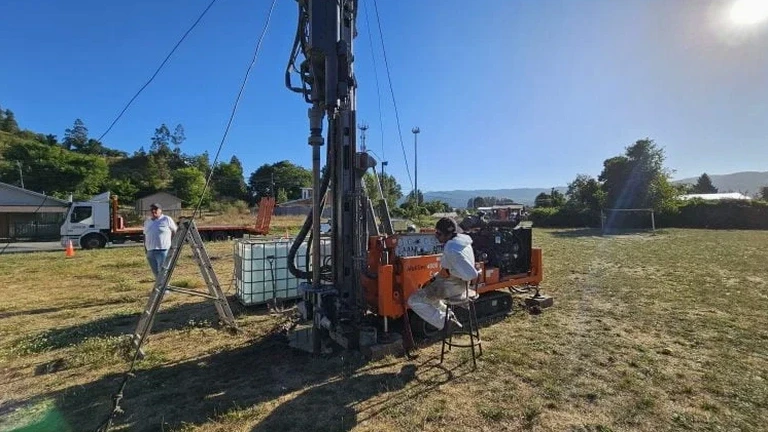
Technical reference image — Sunderland

Local considerations

Ground conditions change sharply between the limestone ridge of Ashbrooke and the alluvial flats near the Stadium of Light. On the high side you get stiff reddish-brown till with limestone cobbles—competent but aggressive to buried concrete. Down by the river it is soft silty clay over river terrace gravels, often with a perched water table at less than a metre. The biggest risk we see is excavating a pit in apparently dry ground and hitting pressurised sand lenses trapped under the clay cap. Without a trained geotechnical engineer in the trench, that is a stability incident waiting to happen. We insist on full CAT scanning for services before digging, and every pit deeper than 1.2 m gets shored or battered back to a safe angle.

Need a geotechnical assessment?

Reply within 24h.

Email: info@geotechnical-engineering.biz

Typical values

ParameterTypical value
Maximum depth (standard)4.5 m
Typical trench length2.5 – 4.0 m
Excavator type8–14 t tracked
Sampling methodBulk, disturbed, block
Applicable standardBS 5930:2015+A1:2020
Groundwater observationStrike level logged

Associated technical services

01

Machine-excavated trial pits

Tracked excavator pits to 4.5 m depth, logged to BS 5930 with sampling at every stratum change, ideal for foundation inspection and buried obstruction mapping across Wearside.

02

Infiltration rate testing

Constant-head or falling-head permeability tests performed directly in the pit floor to support SuDS drainage design, particularly in the low-permeability glacial till of the Sunderland area.

03

Hand-dug inspection pits

Shallow pits excavated manually around live services or in restricted-access rear gardens in terraced streets like those in Roker and Millfield, logged with the same rigour as the mechanised work.

Applicable standards

BS 5930:2015+A1:2020, Eurocode 7 (BS EN 1997-1:2004+A1:2013), BS EN 1997-2:2007

Quick answers

What does an exploratory test pit in Sunderland typically cost?

For a machine-dug pit to 3.5–4.5 m depth with full logging, sampling and a factual report, the cost generally falls between £420 and £570 per pit. The final figure depends on access constraints, the number of pits on the same mobilisation, and whether you need additional permeability testing or laboratory analysis on the samples.

How deep can you go in Sunderland's glacial till?

With a 14-tonne tracked excavator we consistently reach 4.5 m in the stiff boulder clay that dominates much of the city. Beyond that depth the risk of sidewall collapse increases sharply, particularly if groundwater is encountered. For deeper investigation we would switch to a borehole with SPT drilling to get the strength data you need.

Do I need a permit to open a test pit on my site?

In Sunderland, you generally need a permit from the local authority if the pit is within the public highway. On private land, the main requirements are a thorough CAT and Genny scan for buried utilities before digging, and compliance with the Health and Safety at Work Act for trench safety. We handle the utility search and can advise on the permitting process for your specific location.
Location and service area

We serve projects in Sunderland and surrounding areas.

View larger map