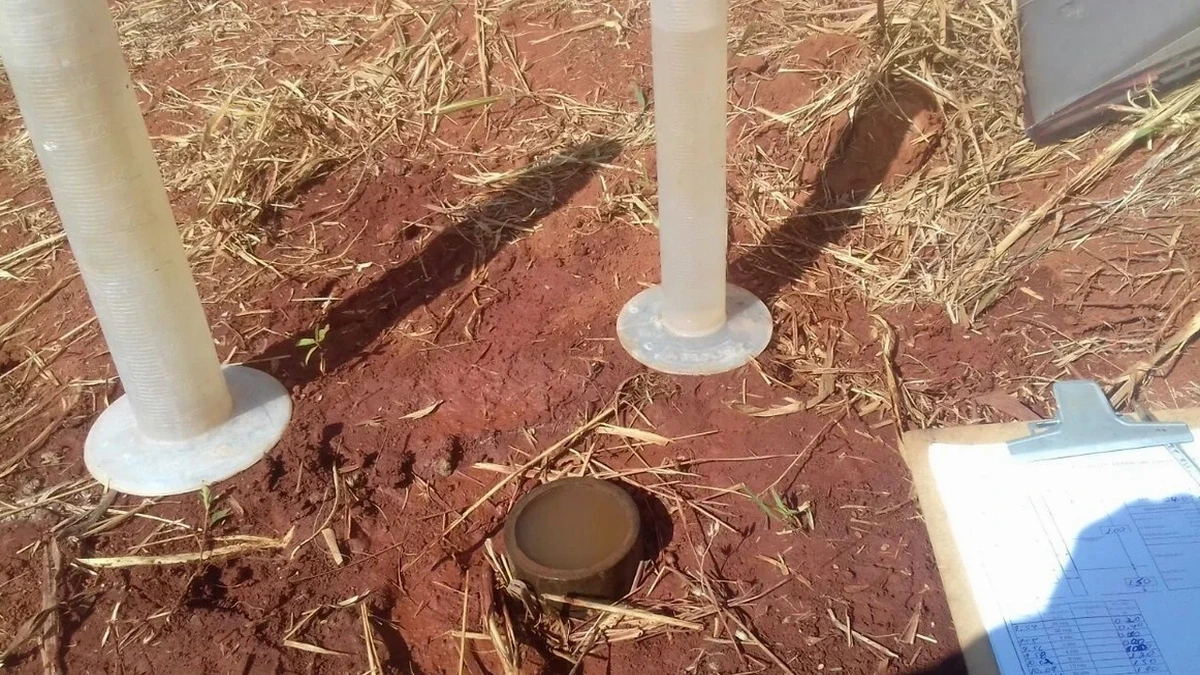
The kit itself is fairly straightforward to look at, just a series of packers, a water tank, and pressure transducers, but getting a clean Lugeon value in Sunderland's fractured Magnesian Limestone takes real focus. Down at sites near the River Wear, where the tidal influence messes with groundwater levels, we set up a double-packer system to isolate specific fracture zones. It's a methodical process: inject water in five steady pressure steps, hold, measure flow rate, and repeat. The aim is to understand how the rock mass actually behaves under head pressure, not just in a lab sample. This data feeds directly into the deep excavation designs that are becoming more common along the waterfront, where a misread on permeability can blow the dewatering budget before you even break ground.
A single Lugeon test in fractured Magnesian Limestone can reveal the difference between a dry excavation and a flooded one, making it the cheapest insurance a developer can buy in Sunderland.
Process and scope
With a population pushing 275,000, Sunderland's development pressure sits squarely on its complex glacial till and limestone sequence. The Lefranc test becomes essential in the low-permeability boulder clay that blankets much of the city's eastern side. We drill to a specific depth, clean the boring, and run either a constant or falling-head test depending on how quickly the water seeps away. It's slow work, but it gives you a direct measurement of hydraulic conductivity for the soil matrix, typically in the range of 10^-5 to 10^-7 m/s in these deposits. When you're designing a retaining wall for a basement car park near Mowbray Park, that number dictates the drainage strategy. A simple change from a passive drain to an active sump system hinges on whether the Lefranc result comes back at 1x10^-6 or 5x10^-6, and we've seen both within a single site.
Regional considerations
We were called out to a commercial plot near the Stadium of Light where the contractor had skipped the permeability assessment and just guessed at the dewatering rate. They installed a wellpoint system based on generic textbook values for sand. The problem was, the sand was actually a silty, fine sand with a permeability two orders of magnitude lower than they'd assumed. The pumps sucked air, the excavation flooded after a heavy rain, and the project stood still for three weeks while they redesigned the system. The cost of that delay would have covered a Lefranc test fifty times over. In Sunderland, where the drift geology switches from permeable river gravels to tight clay within the span of a single street, assuming uniform ground is a gamble. The permeability test answers the one question that governs every dewatering plan: how fast can water actually move through the ground here?
Quick answers
How much does a field permeability test cost in Sunderland?
For a standard Lefranc or single-interval Lugeon test in the Sunderland area, the cost typically falls between £440 and £730, depending on access conditions, depth, and whether the borehole is already available. If you need a full investigation with multiple packer positions and exploratory drilling, the scope and price would be tailored to your site. Just get in touch with our team for a specific quote based on your project's requirements.
When should I choose a Lugeon test over a Lefranc test?
It comes down to the geology. A Lugeon test is designed for fractured rock masses, like the Roker Dolomite or Ford Formation limestone you find across Sunderland. It measures the bulk permeability of the rock, including fissures and joints. A Lefranc test is for soils, so if you're working in the boulder clay or river gravels, that's the right choice. Often, on a site with both soil overburden and shallow bedrock, you'll need both to fully characterise the ground.
How long does a typical permeability test take on site?
A single Lefranc falling-head test in a stable borehole can be completed in about an hour, provided the soil isn't too tight. A full five-cycle Lugeon test in rock, with packer setup and pressure stabilisation at each step, usually takes two to three hours per interval. For a multi-level investigation, you might be looking at a full day on site. The key variable in Sunderland is the tidal influence near the coast; we sometimes need to run extended monitoring to separate the tidal signal from the actual permeability response.