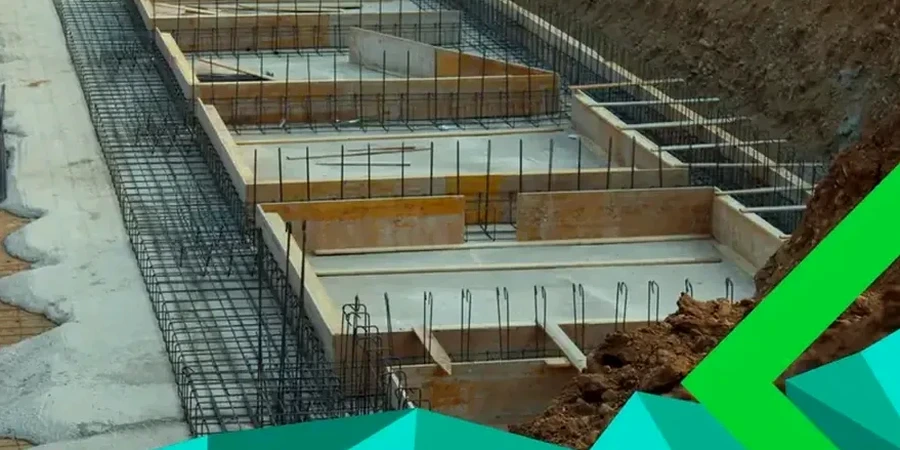
BS EN 1997-1:2004 is the governing framework for any shallow foundation design in Sunderland, and its emphasis on limit state design requires a very clear picture of the ground model. This isn't just a regulatory box to tick when you're working near the River Wear or over the magnesium limestone that underpins much of the city. The geology here transitions sharply from dense glacial till on the higher ground toward softer alluvial deposits in the valleys, and a standard bearing capacity assumption can catch you out if the site investigation missed a lens of laminated clay. Our team focuses on Design Approach 1, checking both the structural and geotechnical limits so the footing geometry, reinforcement, and embedment depth all align with the specific stratigraphy encountered on site. For projects where the near-surface soils are too variable, we often recommend supplementing the desk study with a test pit programme to physically log the first few metres before finalising the foundation plan.
A shallow foundation on Sunderland's glacial till often has the bearing capacity, but settlement under sustained load is the parameter that governs the final design dimensions.
Regional considerations
Sunderland's post-industrial landscape introduces a risk profile that a textbook shallow foundation design won't address. The city has a long history of coal mining and limestone quarrying, and even where the mining records appear complete, unrecorded shallow workings or backfilled quarries can lurk beneath a thin cap of made ground. The seasonal variation in groundwater is another factor: the magnesium limestone aquifer can rise significantly after wet winters, altering the effective stress regime under a footing and potentially triggering collapse of any remaining voids. We approach this by cross-referencing the Coal Authority's mining reports with our own intrusive findings, and if there's any doubt about the continuity of the bearing stratum, we specify a programme of probing ahead of foundation construction. The cost of that extra verification is negligible compared to the structural damage from differential settlement over a partially collapsed stope.
Quick answers
What is the typical shallow foundation design cost for a residential extension in Sunderland?
For a single-storey residential extension on reasonably competent ground in Sunderland, the design and calculation package for a shallow foundation typically falls between £1,690 and £2,310. The final figure depends on the complexity of the ground conditions—sites with a history of mining or deep made ground will require a more involved analysis and a detailed settlement study.
How do you account for the risk of old mine workings under a shallow foundation in Sunderland?
We start with a Coal Authority mining report and then correlate that with the factual data from the ground investigation. If the workings are within a depth that could influence the foundation, we design the reinforced concrete footing as a rigid beam capable of spanning potential voids, following the guidance in PD 6698:2009. In some cases we also specify additional probing from formation level to confirm the absence of any unrecorded shallow workings directly beneath the footing.
What's the minimum footing depth you specify for Sunderland's clay soils?
We generally set a minimum embedment of 750 mm below finished ground level to get below the active zone of seasonal moisture change and frost action. In areas of Sunderland where trees are present or have been removed, we extend that depth further in accordance with the mature tree height and the plasticity index of the clay, as per the guidance in NHBC Standards Chapter 4.2.
Can you design a raft foundation as an alternative to deep piles in Sunderland?
Yes, a raft is often a viable and cost-effective shallow foundation solution in Sunderland, particularly on sites with moderately compressible alluvium where individual pad footings would experience excessive differential settlement. We model the soil-structure interaction using finite element software, sizing the raft thickness and reinforcement to distribute the load and keep angular distortion within tolerable limits for the superstructure.